

Understanding Skin Cancer: Early Signs and Prevention
At nef care foundation, we share vital insights on spotting skin cancer early and practical steps to protect your skin every day.
1/6/20262 min read
Skin cancer is one of the most common cancers worldwide and remains a major public health concern. Fortunately, it is also one of the most preventable and treatable forms of cancer when detected early. Most skin cancers are linked to prolonged exposure to ultraviolet (UV) radiation from sunlight or tanning devices, which can gradually damage the DNA of skin cells over time.[1]
What Is Skin Cancer?
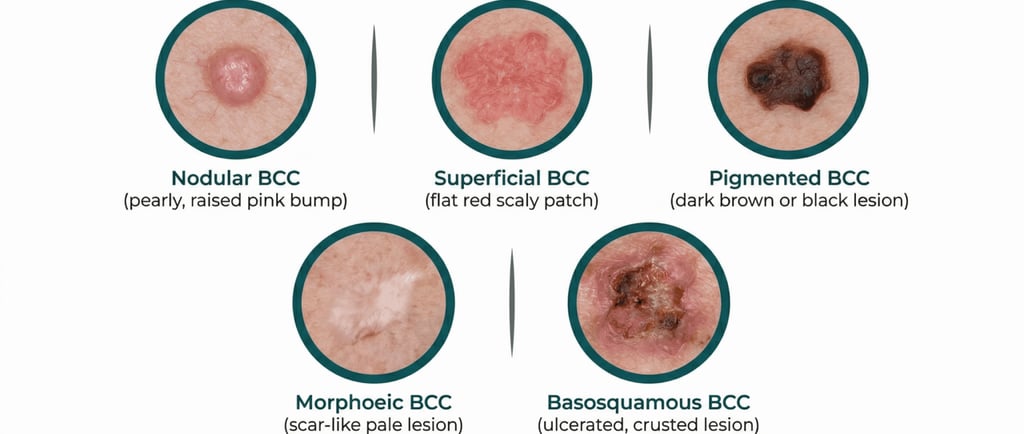
Skin cancer occurs when abnormal skin cells grow uncontrollably. The three most common types include:
Basal Cell Carcinoma (BCC)
The most common form of skin cancer. BCC typically grows slowly and rarely spreads to other parts of the body.[2]
Squamous Cell Carcinoma (SCC)
A more aggressive form that may spread if left untreated. SCC often develops in areas frequently exposed to the sun.[2]
Melanoma
Although less common, melanoma is the most dangerous type of skin cancer because it can metastasize rapidly to other organs.[3]
Early Signs: The ABCDE Rule
Early detection significantly increases survival rates, especially for melanoma. Dermatologists commonly use the ABCDE rule to identify suspicious moles or skin lesions:[4]
A – Asymmetry: One half differs from the other.
B – Border: Irregular, blurred, or jagged edges.
C – Color: Uneven coloration or multiple shades.
D – Diameter: Larger than 6 mm, although melanomas can also be smaller.
E – Evolving: Changes in shape, color, size, or symptoms such as itching or bleeding.
Any new or changing skin lesion should be evaluated by a healthcare professional.
Prevention Strategies
Scientific evidence shows that reducing UV exposure lowers the risk of developing skin cancer.[5]
Daily Sun Protection
Apply a broad-spectrum SPF 30 or higher sunscreen every day.
Reapply sunscreen every two hours during prolonged outdoor exposure.
Use protective clothing, sunglasses, and wide-brimmed hats.
Avoid Peak UV Hours
Seek shade and minimize direct sun exposure between 10 a.m. and 4 p.m., when UV radiation is strongest.[5]
Avoid Tanning Beds
Artificial UV radiation from tanning beds significantly increases melanoma risk and should be avoided entirely.[6]
Perform Regular Skin Checks
Monthly self-examinations and regular dermatology visits can help identify suspicious lesions early.[4]
Skin Cancer Affects All Skin Tones
A common misconception is that darker skin tones are not at risk for skin cancer. While melanin provides some natural protection, skin cancer can occur in individuals of all ethnicities and skin types. Delayed diagnosis in darker skin tones may lead to worse outcomes, making awareness and early detection essential for everyone.[7]
Nef Care Foundation’s Mission
The Nef Care Foundation is committed to improving public awareness around skin health, sun safety, and early skin cancer detection. Through education campaigns, accessible sunscreen initiatives, and prevention-focused outreach programs and creating an ethical accessible skin care for vulnerable populations , we WANT to make skin protection accessible to all communities.
References
Armstrong BK, Kricker A. The epidemiology of UV induced skin cancer. Journal of Photochemistry and Photobiology B. 2001;63(1–3):8–18.
Green AC, Williams GM, Logan V, Strutton GM. Reduced melanoma after regular sunscreen use: randomized trial follow-up. Journal of Clinical Oncology. 2011;29(3):257–263.
World Health Organization – Artificial Tanning Devices: Public Health Interventions